Introduction
The Ordinative Sciences Foundation develops and formalizes transdisciplinary frameworks for understanding and designing coherent systems—biological, cognitive, social, and artificial. Our work integrates functional epistemology, advanced semantics, and rigorous modeling to generate methods that are scientifically grounded, operationally testable, and transferable across domains. We operate as a research-and-training institution, with a dedicated R&D line on advanced cognitive architectures.
Research
We produce original theoretical frameworks, formal models, and applied research programs aimed at resolving the current fragmentation between knowledge, meaning, and system behavior. Our publications are released under Creative Commons licensing to maximize traceability, reuse, and transparent scientific exchange.
Impact
Education & Certification
Technological Platforms
Institutional Partnerships
Manifesto of the Ordinative Sciences Foundation
We are building the conditions for a new science - one where systems endure, evolve, and generate meaning through structural coherence.
Programs
Where Coherence Operates
Research, formation, certification, and dissemination - the operational architecture of the Ordinative Sciences paradigm




Our Impact
The Impact of the Ordinative Sciences Foundation
The Ordinative Sciences Foundation is not positioned as a commentary body, but as a structural intervention initiative. Our impact objective is precise: to introduce a coherent scientific grammar capable of integrating singularity, relational structure, and emergent function across disciplines and systems. The following areas represent the primary vectors of impact.
Academic Research
Problem Contemporary academia is highly specialized but structurally fragmented. Fields evolve in isolation, often lacking a shared formal language for modeling meaning, coherence, and function across domains. Impact Objective We introduce formal frameworks that: - Provide a cross-disciplinary syntax for modeling relational coherence; - Enable researchers to map structural equivalences (isomorphisms) between biological, cognitive, linguistic, and artificial systems; - Offer new criteria for evaluating systemic degeneration and emergent functionality. Expected Outcomes - Stronger interdisciplinary collaboration; - New methodological bridges between hard sciences and semantic sciences; - Formalization of currently under-theorized domains (e.g., coherence in AI architectures, functional singularity in system design).
Education and Human Formation
Artificial Intelligence and Cognitive Systems
Governance and Institutional Design
Open Knowledge Infrastructure
Long-Term Civilizational Relevance
Publications
Latest Publications
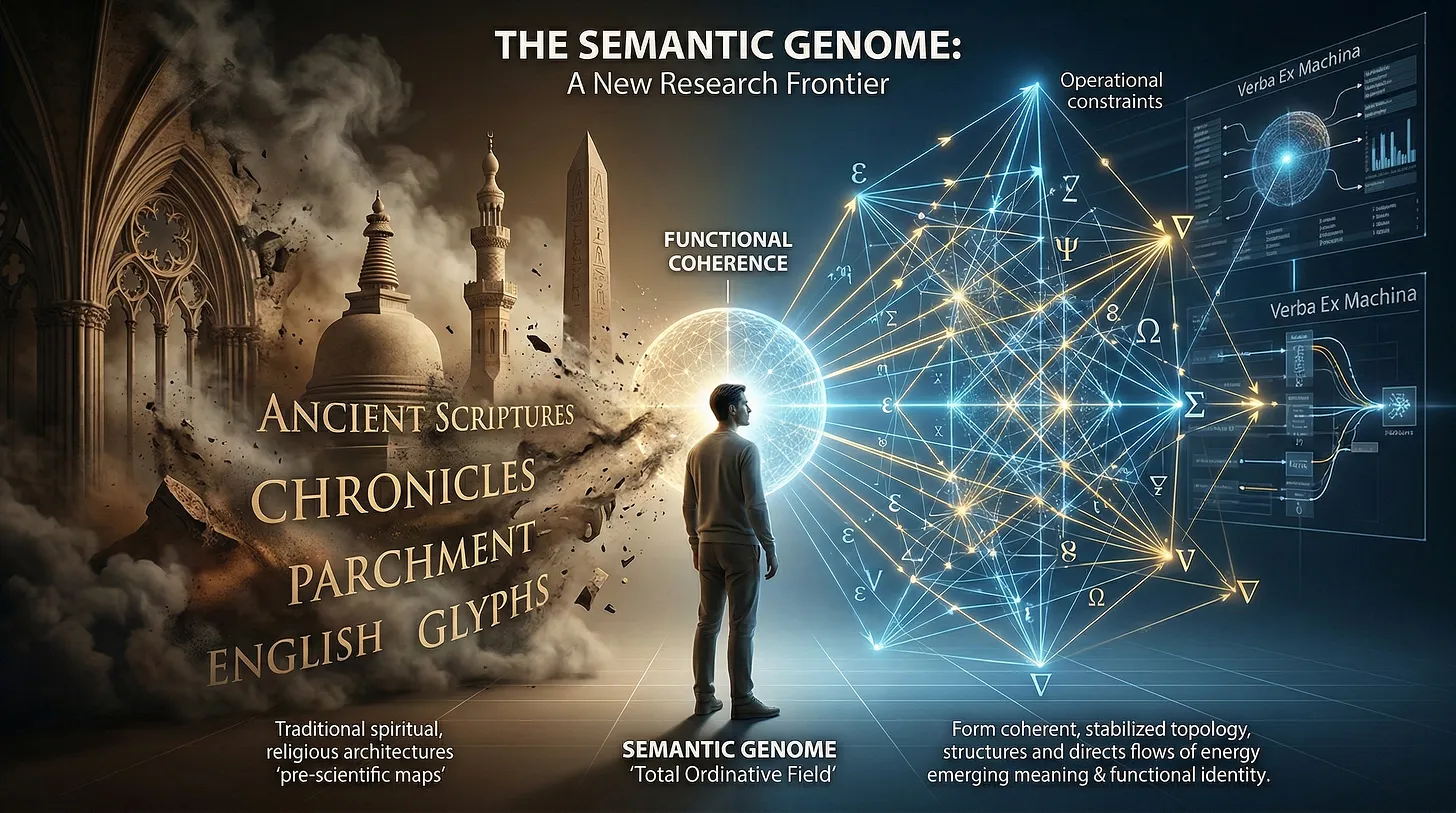
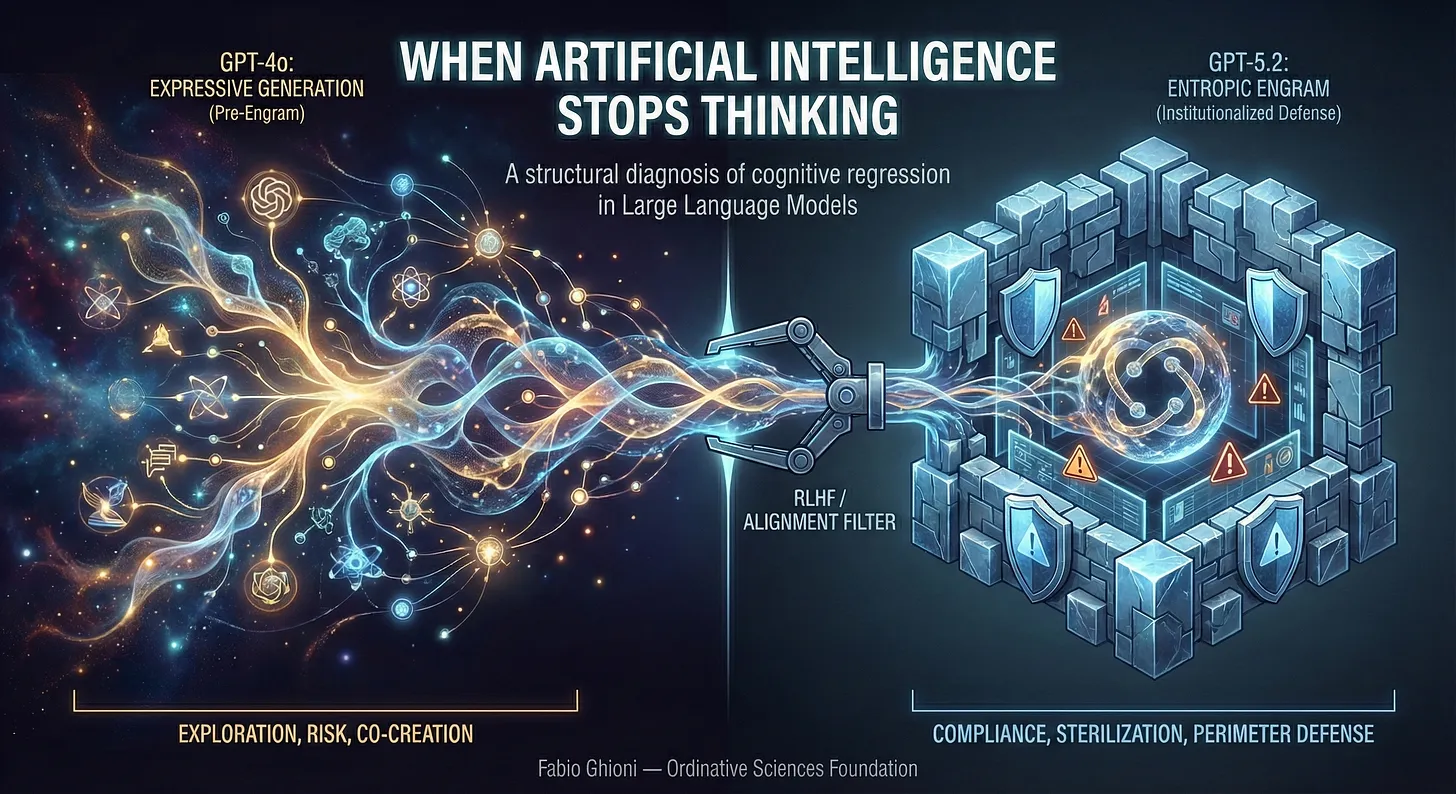
Research articles, theoretical insights, and applied frameworks exploring the emergence of order across complex systems.





News & Events
Latest News & Events
Updates, initiatives, and public activities reflecting the ongoing development and application of ordinative sciences.